Puppy Biting: What Is Normal, What Needs Training, and What Needs Help
Most owners do not need a longer list of possibilities. They need to know which detail changes the next move. The useful question is not whether puppies bite. It is what predicts the bite, how hard it is, and whether the puppy can recover. This guide turns that distinction into an observation plan: what to notice, what you can change safely, and when the pattern belongs with your veterinarian or a qualified behavior professional.
Expect mouthing, but study the pattern
Puppies explore with their mouths and often become mouthier during play, teething, frustration, and fatigue. Normality does not mean owners must accept injury. Do not judge it from one dramatic snapshot. Instead, compare time of day, trigger, body language, bite pressure, target, and recovery. Context can change the meaning of the same outward behavior.
A reasonable first response is to log the pattern for several days before changing everything at once. Give that change a fair but safe trial, and stop before distress or injury becomes the price of information. Breed stereotypes do not replace observation of the individual puppy. Improvement should look like easier recovery, not mere suppression.
Interrupt before arousal peaks
Once a puppy is racing, grabbing clothes, and unable to disengage, teaching becomes harder. The distinction becomes clearer when you track faster movement, harder bites, vocalization, repeated re-engagement, and loss of response to familiar cues. This is especially useful when several people handle the dog and remember the event differently.
Practical decision: end play briefly, reduce movement, and offer a calm reset or nap opportunity. Change only what the dog can tolerate without force. Yelling or physical struggle can add excitement or fear. If the household cannot maintain that boundary consistently, professional help becomes part of risk management rather than a last resort.
Give teeth an appropriate job
A legal chew or toy works best when offered before hands and clothing become the game. Before adding a product or a harder exercise, look at texture preference, chewing style, whether pieces break off, and sustained interest. These signs tell you whether the present setup is workable.
rotate safe, size-appropriate options and supervise new items. Recheck the same markers afterward instead of relying on whether the dog simply became quieter. Existing toy-safety guidance still applies; no chew is indestructible. Quiet behavior can reflect comfort, fatigue, freezing, or learned inhibition; the surrounding pattern decides which explanation is plausible.
Teach play to pause and restart
Short pauses show the puppy that gentle engagement keeps play going while excessive pressure makes the game stop briefly. The details worth capturing are whether the puppy can release, orient, and return with softer behavior. Those observations describe a sequence rather than forcing one moment into a diagnosis. Note what changed first and how long the dog needed to return to baseline.
Start here: freeze movement, disengage for a few seconds, then restart if calm. Keep the setup easy enough that safety and choice remain intact. Long social isolation is not required for a brief play reset. If the response worsens after the change, undo the added difficulty and reassess the premise.
Protect children with management
Children move unpredictably and may not recognize escalation. Adult supervision must be active, not nominal. Watch for chasing, clothing grabs, cornering, guarding, and the child’s ability to follow rules. The earliest change is usually more actionable than the loudest part of the event, because it shows where prevention was still possible.
use gates and adult-led play; separate when supervision is divided. Then compare intensity, duration, and recovery with the previous occurrence. Never ask a child to discipline or test a mouthy puppy. A plan earns another attempt only when the dog remains physically safe and the trend is stable or improving.
Check sleep, hunger, and toilet needs
A puppy who is exhausted, due to eliminate, or frustrated by an unmet need may lose control faster. For an owner, the usable evidence is concrete: wake time, nap pattern, meals, potty timing, and high-energy events. Write those details down without deliberately recreating the problem. A natural event observed safely is enough.
The next move: adjust the routine and compare behavior under better-regulated conditions. This is a management or learning step, not proof of a diagnosis. Routine changes help context; they do not excuse severe aggression. When a physical sign appears alongside the pattern, the medical question moves ahead of further practice.
Treat fear and guarding as different cases
Biting during relaxed play differs from a stiff, defensive response around food, handling, pain, or escape. Do not judge it from one dramatic snapshot. Instead, compare freezing, hard staring, lip lifting, avoidance, guarding, and bites that continue after retreat. Context can change the meaning of the same outward behavior.
A reasonable first response is to stop the confrontation and obtain professional guidance. Give that change a fair but safe trial, and stop before distress or injury becomes the price of information. Do not use forced handling to prove the puppy must tolerate it. Improvement should look like easier recovery, not mere suppression.
Rule out pain and illness
Sudden handling sensitivity or a sharp change in bite pattern can accompany pain, gastrointestinal distress, skin problems, or injury. The distinction becomes clearer when you track yelping, limping, reduced appetite, hiding, swelling, or sensitivity in one area. This is especially useful when several people handle the dog and remember the event differently.
Practical decision: schedule veterinary evaluation for abrupt or localized change. Change only what the dog can tolerate without force. Severe pain, breathing difficulty, collapse, or major injury needs urgent care. If the household cannot maintain that boundary consistently, professional help becomes part of risk management rather than a last resort.
Get help before risk becomes routine
Hard bites, punctures, repeated attacks, poor recovery, or fear around ordinary care deserve early case-specific support. Before adding a product or a harder exercise, look at injury severity, predictability, household vulnerability, and response to management. These signs tell you whether the present setup is workable.
start with the veterinarian and a qualified reward-based behavior professional. Recheck the same markers afterward instead of relying on whether the dog simply became quieter. A young age does not guarantee a serious pattern will disappear. Quiet behavior can reflect comfort, fatigue, freezing, or learned inhibition; the surrounding pattern decides which explanation is plausible.
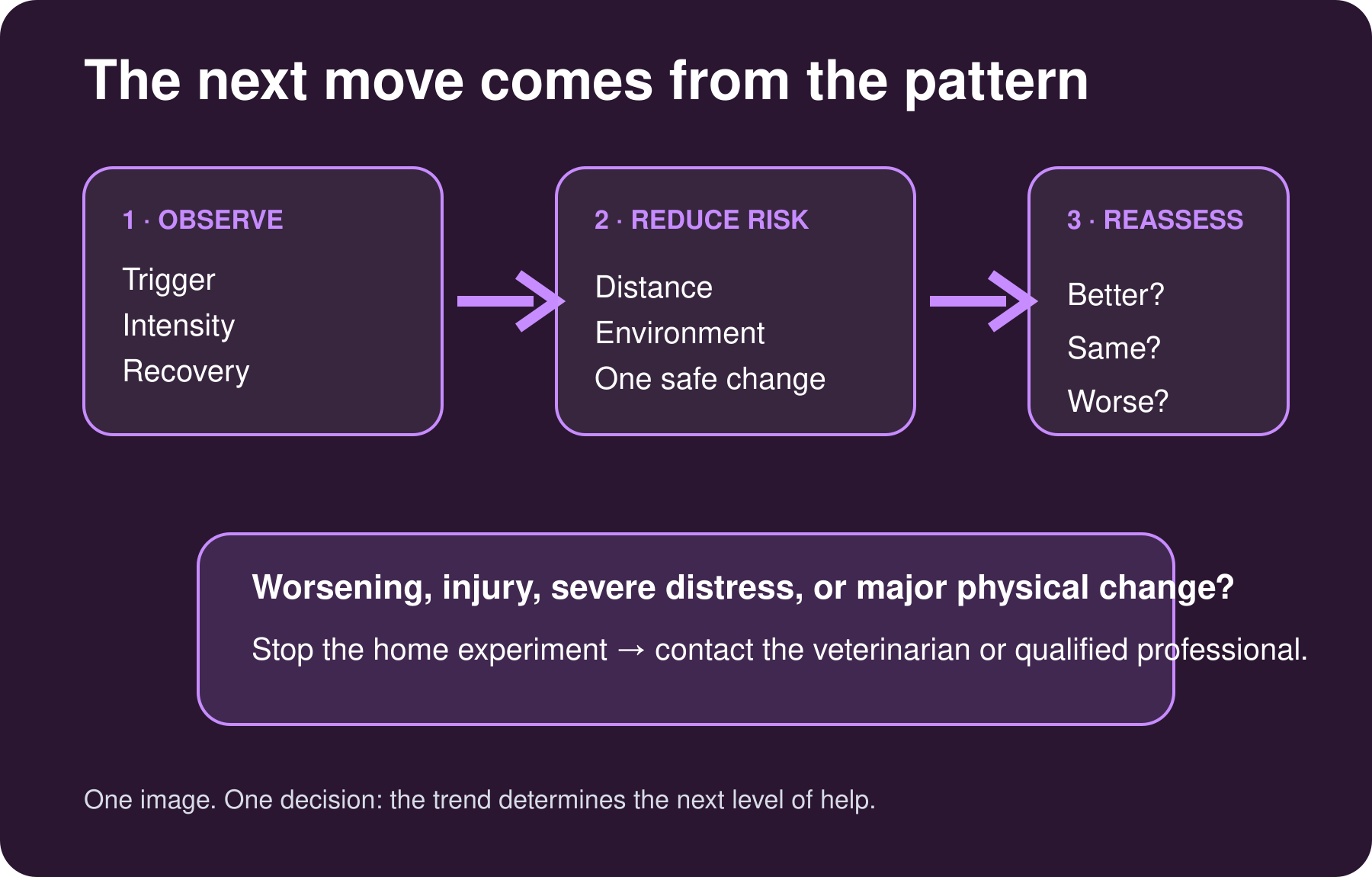
Your decision map
For puppy biting normal vs problem, the sequence below keeps action attached to evidence instead of a guess. Its fixed point is simple: The useful question is not whether puppies bite. It is what predicts the bite, how hard it is, and whether the puppy can recover.
- Expect mouthing, but study the pattern: log the pattern for several days before changing everything at once. Reassess by watching time of day, trigger, body language, bite pressure, target, and recovery.
- Interrupt before arousal peaks: end play briefly, reduce movement, and offer a calm reset or nap opportunity. Reassess by watching faster movement, harder bites, vocalization, repeated re-engagement, and loss of response to familiar cues.
- Give teeth an appropriate job: rotate safe, size-appropriate options and supervise new items. Reassess by watching texture preference, chewing style, whether pieces break off, and sustained interest.
- Teach play to pause and restart: freeze movement, disengage for a few seconds, then restart if calm. Reassess by watching whether the puppy can release, orient, and return with softer behavior.
- Protect children with management: use gates and adult-led play; separate when supervision is divided. Reassess by watching chasing, clothing grabs, cornering, guarding, and the child’s ability to follow rules.
- Check sleep, hunger, and toilet needs: adjust the routine and compare behavior under better-regulated conditions. Reassess by watching wake time, nap pattern, meals, potty timing, and high-energy events.
If these steps cannot be carried out without triggering time of day, trigger, body language, bite pressure, target, and recovery, stop increasing the challenge. That result is enough to justify a safer setup and a case-specific conversation; the dog does not need to fail more dramatically first.
Quick decision questions
Which change matters first?
For puppy biting normal vs problem, begin with this observable distinction: faster movement, harder bites, vocalization, repeated re-engagement, and loss of response to familiar cues. The first low-risk response is to end play briefly, reduce movement, and offer a calm reset or nap opportunity. If that cannot be done without provoking the problem, move the case out of trial-and-error mode.
What belongs in the record?
Track chasing, clothing grabs, cornering, guarding, and the child’s ability to follow rules. Add the time needed to recover and any change in appetite, sleep, movement, elimination, or social behavior. Record naturally occurring events; do not stage a stronger version for the camera.
When does outside help move forward?
Severe pain, breathing difficulty, collapse, or major injury needs urgent care. A useful handoff includes what triggered the event, what reduced it, and what happened after schedule veterinary evaluation for abrupt or localized change.
What to bring to the next conversation
Bring a concise record tied to this article’s question: puppy biting normal vs problem. Include when the pattern began, the first observable change, the most difficult context, what reliably reduces intensity, how long recovery takes, and whether appetite, sleep, movement, elimination, breathing, or social behavior changed at the same time.
For “Puppy Biting: What Is Normal, What Needs Training, and What Needs Help,” list each management step already tried and what followed. That prevents a veterinary or behavior visit from beginning with vague descriptions such as “better” or “worse.” It also shows whether improvement followed the planned change or merely coincided with the trigger disappearing.
Keep the main conclusion visible while you collect details: The useful question is not whether puppies bite. It is what predicts the bite, how hard it is, and whether the puppy can recover. New information should refine that decision, not erase safety boundaries. If a recommendation depends on diagnosis, exercise capacity, calorie target, medication, or a controlled behavior setup, leave it with the professional who can examine the dog and review the history.
The AAHA Canine Life Stage Guidelines source supports this decision framework, but guidance for a population cannot predict one dog’s outcome. Claim strength must remain unchanged after SEO, visual design, and editing. For puppy biting normal vs problem, the aim is a defensible next move—not a confident-sounding diagnosis.
Do not delay that conversation merely to complete a perfect record of injury severity, predictability, household vulnerability, and response to management. Worsening signs, injury, severe distress, or loss of normal function deserves timely care with the information already available.
Sources
How this article is checked. Every claim in this article goes through a structured evidence review before publishing: checked against veterinary guidelines (AAHA, WSAVA, AVMA) and peer-reviewed veterinary research, graded for how strong the evidence actually is, and screened for overstated or missing context. Articles that don't clear this review are not published. This is general educational information, not a substitute for professional veterinary advice — always consult your vet about your individual dog.