Dog Enrichment Rotation: Stop Buying More Toys and Start Rotating Jobs
Most owners do not need a longer list of possibilities. They need to know which detail changes the next move. Rotate the kind of work—sniff, search, chew, shred, solve, move—not just the object. This guide turns that distinction into an observation plan: what to notice, what you can change safely, and when the pattern belongs with your veterinarian or a qualified behavior professional.
Start with behavioral jobs
A basket full of similar squeaky toys offers variety to the owner, not necessarily to the dog. The distinction becomes clearer when you track which actions hold interest: sniffing, carrying, chewing, searching, tearing, licking, or social play. This is especially useful when several people handle the dog and remember the event differently.
Practical decision: list three jobs the dog enjoys before choosing activities. Change only what the dog can tolerate without force. Breed tendencies are clues, not rules. If the household cannot maintain that boundary consistently, professional help becomes part of risk management rather than a last resort.
Use novelty sparingly
Temporary removal can renew interest, but constant novelty can create clutter and supervision problems. Before adding a product or a harder exercise, look at return to an item after several days, play duration, and destructive wear. These signs tell you whether the present setup is workable.
keep a small active set and store the rest clean and dry. Recheck the same markers afterward instead of relying on whether the dog simply became quieter. Do not rotate damaged items back into use. Quiet behavior can reflect comfort, fatigue, freezing, or learned inhibition; the surrounding pattern decides which explanation is plausible.
Match the day, not a rigid calendar
Weather, health, household schedule, and the dog’s arousal level change what is useful. The details worth capturing are energy, mobility, appetite, stress, and time available for supervision. Those observations describe a sequence rather than forcing one moment into a diagnosis. Note what changed first and how long the dog needed to return to baseline.
Start here: choose one suitable job rather than forcing Monday’s assigned activity. Keep the setup easy enough that safety and choice remain intact. Consistency helps routines, but rigidity can miss the dog in front of you. If the response worsens after the change, undo the added difficulty and reassess the premise.
Count food enrichment in the diet
Food puzzles, training rewards, chews, and scatter feeding all contribute calories. Watch for total daily food, treat calories, body condition, and stomach tolerance. The earliest change is usually more actionable than the loudest part of the event, because it shows where prevention was still possible.
reserve part of the measured daily ration for enrichment. Then compare intensity, duration, and recovery with the previous occurrence. Enrichment should not quietly become overfeeding. A plan earns another attempt only when the dog remains physically safe and the trend is stable or improving.
Make low-cost activities legitimate
A sniff search, cardboard exploration, towel roll, or training game may meet the job without a purchase. For an owner, the usable evidence is concrete: ingestion habits, material safety, cleanup, and frustration. Write those details down without deliberately recreating the problem. A natural event observed safely is enough.
The next move: use household materials only when supervised and appropriate for the individual. This is a management or learning step, not proof of a diagnosis. Cheap does not mean risk-free. When a physical sign appears alongside the pattern, the medical question moves ahead of further practice.
Build calm options as well as active ones
High-energy games are only one category. Chewing, licking, scent work, and relaxed observation can fit lower-intensity periods. Do not judge it from one dramatic snapshot. Instead, compare whether the activity raises or lowers arousal and how the dog behaves afterward. Context can change the meaning of the same outward behavior.
A reasonable first response is to place active and settling options in the rotation. Give that change a fair but safe trial, and stop before distress or injury becomes the price of information. No activity is universally calming. Improvement should look like easier recovery, not mere suppression.
Adapt for pain, sensory change, and age
A familiar activity may become difficult when vision, hearing, mobility, teeth, or cognition changes. The distinction becomes clearer when you track new hesitation, dropping objects, altered posture, frustration, or fatigue. This is especially useful when several people handle the dog and remember the event differently.
Practical decision: simplify the setup and seek veterinary assessment for new functional change. Change only what the dog can tolerate without force. Do not treat sudden disengagement as boredom without checking health. If the household cannot maintain that boundary consistently, professional help becomes part of risk management rather than a last resort.
Use a one-week observation loop
A short log can reveal preferences without turning enrichment into a laboratory. Before adding a product or a harder exercise, look at activity, duration, engagement style, frustration, recovery, and repeat interest. These signs tell you whether the present setup is workable.
review after seven days and keep what clearly works. Recheck the same markers afterward instead of relying on whether the dog simply became quieter. One refusal does not permanently reject an activity. Quiet behavior can reflect comfort, fatigue, freezing, or learned inhibition; the surrounding pattern decides which explanation is plausible.
Let purchases earn a place
A product deserves space when it adds a job, improves safety, saves setup time, or fits a physical limitation. The details worth capturing are distinct function, durability, cleanability, storage, and actual use. Those observations describe a sequence rather than forcing one moment into a diagnosis. Note what changed first and how long the dog needed to return to baseline.
Start here: delay buying until the unmet job is named. Keep the setup easy enough that safety and choice remain intact. More products do not prove a richer life. If the response worsens after the change, undo the added difficulty and reassess the premise.
Your decision map
For dog enrichment rotation schedule, the sequence below keeps action attached to evidence instead of a guess. Its fixed point is simple: Rotate the kind of work—sniff, search, chew, shred, solve, move—not just the object.
- Start with behavioral jobs: list three jobs the dog enjoys before choosing activities. Reassess by watching which actions hold interest: sniffing, carrying, chewing, searching, tearing, licking, or social play.
- Use novelty sparingly: keep a small active set and store the rest clean and dry. Reassess by watching return to an item after several days, play duration, and destructive wear.
- Match the day, not a rigid calendar: choose one suitable job rather than forcing Monday’s assigned activity. Reassess by watching energy, mobility, appetite, stress, and time available for supervision.
- Count food enrichment in the diet: reserve part of the measured daily ration for enrichment. Reassess by watching total daily food, treat calories, body condition, and stomach tolerance.
- Make low-cost activities legitimate: use household materials only when supervised and appropriate for the individual. Reassess by watching ingestion habits, material safety, cleanup, and frustration.
- Build calm options as well as active ones: place active and settling options in the rotation. Reassess by watching whether the activity raises or lowers arousal and how the dog behaves afterward.
If these steps cannot be carried out without triggering which actions hold interest: sniffing, carrying, chewing, searching, tearing, licking, or social play, stop increasing the challenge. That result is enough to justify a safer setup and a case-specific conversation; the dog does not need to fail more dramatically first.
Quick decision questions
Which change matters first?
For dog enrichment rotation schedule, begin with this observable distinction: return to an item after several days, play duration, and destructive wear. The first low-risk response is to keep a small active set and store the rest clean and dry. If that cannot be done without provoking the problem, move the case out of trial-and-error mode.
What belongs in the record?
Track ingestion habits, material safety, cleanup, and frustration. Add the time needed to recover and any change in appetite, sleep, movement, elimination, or social behavior. Record naturally occurring events; do not stage a stronger version for the camera.
When does outside help move forward?
One refusal does not permanently reject an activity. A useful handoff includes what triggered the event, what reduced it, and what happened after review after seven days and keep what clearly works.
What to bring to the next conversation
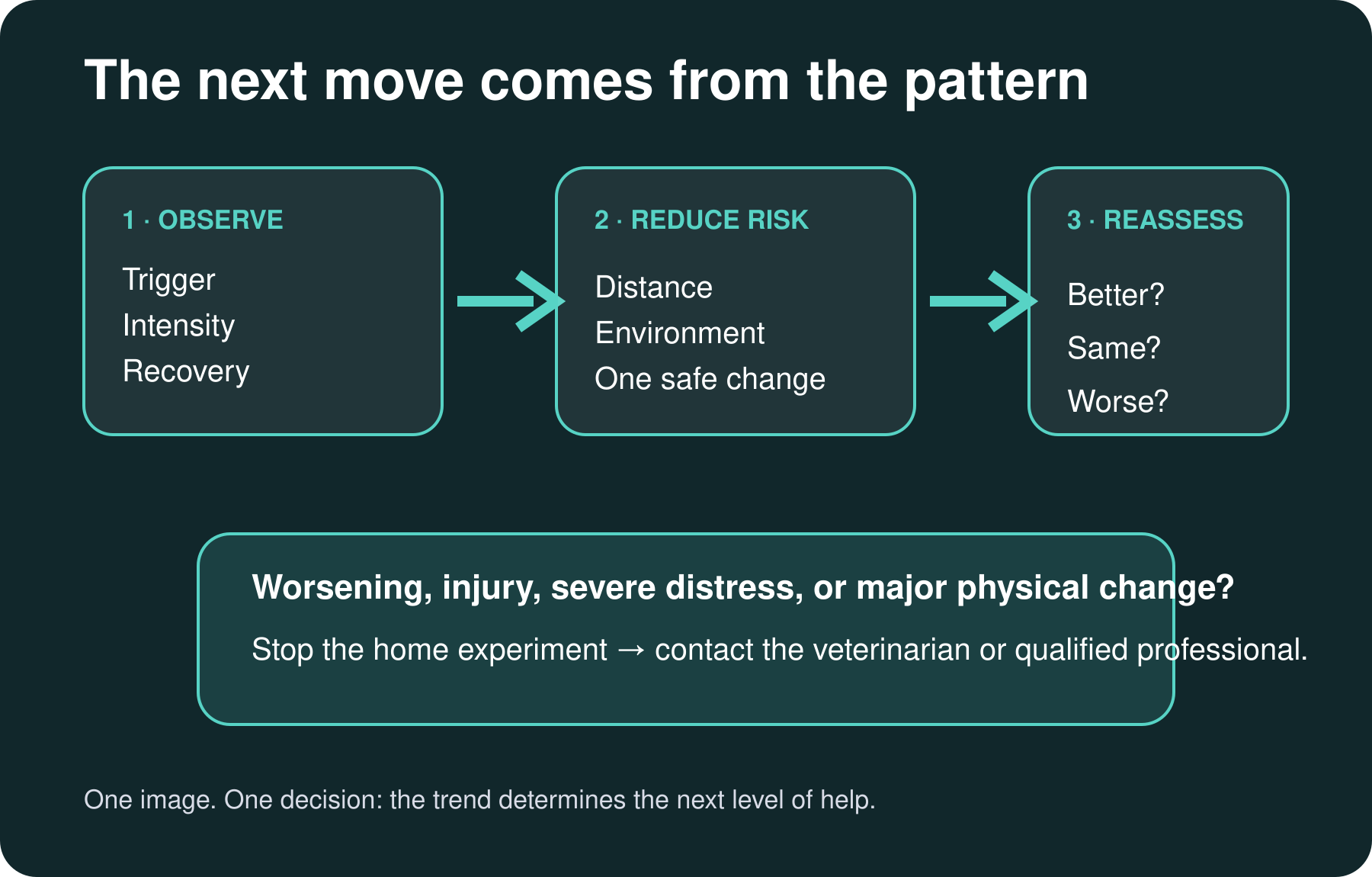
Bring a concise record tied to this article’s question: dog enrichment rotation schedule. Include when the pattern began, the first observable change, the most difficult context, what reliably reduces intensity, how long recovery takes, and whether appetite, sleep, movement, elimination, breathing, or social behavior changed at the same time.
For “Dog Enrichment Rotation: Stop Buying More Toys and Start Rotating Jobs,” list each management step already tried and what followed. That prevents a veterinary or behavior visit from beginning with vague descriptions such as “better” or “worse.” It also shows whether improvement followed the planned change or merely coincided with the trigger disappearing.
Keep the main conclusion visible while you collect details: Rotate the kind of work—sniff, search, chew, shred, solve, move—not just the object. New information should refine that decision, not erase safety boundaries. If a recommendation depends on diagnosis, exercise capacity, calorie target, medication, or a controlled behavior setup, leave it with the professional who can examine the dog and review the history.
The AAHA Mature Adult Dog Guidance source supports this decision framework, but guidance for a population cannot predict one dog’s outcome. Claim strength must remain unchanged after SEO, visual design, and editing. For dog enrichment rotation schedule, the aim is a defensible next move—not a confident-sounding diagnosis.
Do not delay that conversation merely to complete a perfect record of distinct function, durability, cleanability, storage, and actual use. Worsening signs, injury, severe distress, or loss of normal function deserves timely care with the information already available.
Sources
How this article is checked. Every claim in this article goes through a structured evidence review before publishing: checked against veterinary guidelines (AAHA, WSAVA, AVMA) and peer-reviewed veterinary research, graded for how strong the evidence actually is, and screened for overstated or missing context. Articles that don't clear this review are not published. This is general educational information, not a substitute for professional veterinary advice — always consult your vet about your individual dog.