When a Dog Is Afraid of the Crate: Training Problem or Confinement Distress?
Most owners do not need a longer list of possibilities. They need to know which detail changes the next move. A crate is useful only while it remains a safe space. Panic is a stop signal, not a cue to wait longer. This guide turns that distinction into an observation plan: what to notice, what you can change safely, and when the pattern belongs with your veterinarian or a qualified behavior professional.
Separate hesitation from panic
Pausing at the door is different from frantic escape behavior. The distinction changes whether gradual practice is reasonable or confinement should stop. Before adding a product or a harder exercise, look at panting when cool, drooling, continuous vocalizing, bar biting, bloody nails, elimination, and inability to eat. These signs tell you whether the present setup is workable.
end the setup before panic and use a safer management arrangement. Recheck the same markers afterward instead of relying on whether the dog simply became quieter. Do not assume the dog will simply tire out. Quiet behavior can reflect comfort, fatigue, freezing, or learned inhibition; the surrounding pattern decides which explanation is plausible.
Check whether the crate is the trigger
Some dogs struggle with any barrier; others are comfortable behind a gate but panic in a closed crate. The details worth capturing are response to an open crate, closed door with owner present, baby gate, pen, and being alone loose. Those observations describe a sequence rather than forcing one moment into a diagnosis. Note what changed first and how long the dog needed to return to baseline.
Start here: compare low-risk setups without pushing to distress. Keep the setup easy enough that safety and choice remain intact. Testing should stop at early stress, not continue until the difference is dramatic. If the response worsens after the change, undo the added difficulty and reassess the premise.
Make the resting space physically workable
Poor size, heat, unstable flooring, noise, or painful entry can make confinement harder. Watch for turning space, comfortable posture, temperature, ventilation, footing, and ease of stepping in. The earliest change is usually more actionable than the loudest part of the event, because it shows where prevention was still possible.
adjust location and bedding, and remove snag hazards. Then compare intensity, duration, and recovery with the previous occurrence. Soft bedding is not safe for every chewer; match materials to the dog. A plan earns another attempt only when the dog remains physically safe and the trend is stable or improving.
Rebuild voluntary entry
Choice changes the exercise. Start with the door secured open and let the dog approach or leave. For an owner, the usable evidence is concrete: willingness to look in, step in, eat, rest, and return after exiting. Write those details down without deliberately recreating the problem. A natural event observed safely is enough.
The next move: reinforce small voluntary steps and keep sessions brief. This is a management or learning step, not proof of a diagnosis. Do not lure the dog inside and then suddenly close the door. When a physical sign appears alongside the pattern, the medical question moves ahead of further practice.
Add the door as a separate skill
Comfort inside does not automatically mean comfort with the door moving or latching. Do not judge it from one dramatic snapshot. Instead, compare body tension as the door shifts, orientation to the exit, and ability to continue eating. Context can change the meaning of the same outward behavior.
A reasonable first response is to move the door slightly, reinforce, reopen, and build duration in tiny increments. Give that change a fair but safe trial, and stop before distress or injury becomes the price of information. If stress rises, shorten duration rather than increasing reward pressure. Improvement should look like easier recovery, not mere suppression.
Do not use the crate to solve every problem
A crate can support management, transport, and rest. It does not by itself treat separation anxiety, excess energy, pain, or house-training mistakes. The distinction becomes clearer when you track whether distress occurs only alone, only confined, after exercise, or during specific noises. This is especially useful when several people handle the dog and remember the event differently.
Practical decision: match the intervention to the pattern instead of adding hours. Change only what the dog can tolerate without force. Long confinement can create welfare problems even in a dog who stays quiet. If the household cannot maintain that boundary consistently, professional help becomes part of risk management rather than a last resort.
Consider medical contributors
Pain, gastrointestinal urgency, urinary problems, cognitive change, and medication effects can make confinement newly difficult. Before adding a product or a harder exercise, look at sudden onset, nighttime restlessness, accidents, vocalizing with movement, or changes in thirst and urination. These signs tell you whether the present setup is workable.
seek veterinary assessment for new distress or accompanying physical signs. Recheck the same markers afterward instead of relying on whether the dog simply became quieter. Do not frame a new senior-dog change as stubbornness. Quiet behavior can reflect comfort, fatigue, freezing, or learned inhibition; the surrounding pattern decides which explanation is plausible.
Use an absence camera wisely
Video can reveal timing and intensity without relying on what the room looks like when you return. The details worth capturing are latency to stress, pacing, orientation to exits, eating, settling, and recovery. Those observations describe a sequence rather than forcing one moment into a diagnosis. Note what changed first and how long the dog needed to return to baseline.
Start here: record a short, safely planned absence below known panic duration. Keep the setup easy enough that safety and choice remain intact. Do not create a long absence merely to collect evidence. If the response worsens after the change, undo the added difficulty and reassess the premise.
Know when the crate should be paused
Self-injury, escape attempts, sustained panic, or worsening responses mean safety outranks the training plan. Watch for damaged teeth, bleeding, collapse, breathing difficulty, or inability to recover. The earliest change is usually more actionable than the loudest part of the event, because it shows where prevention was still possible.
contact a veterinarian promptly and use a secure alternative that does not trigger the same response. Then compare intensity, duration, and recovery with the previous occurrence. Severe breathing difficulty, collapse, or major injury requires emergency care. A plan earns another attempt only when the dog remains physically safe and the trend is stable or improving.
Your decision map
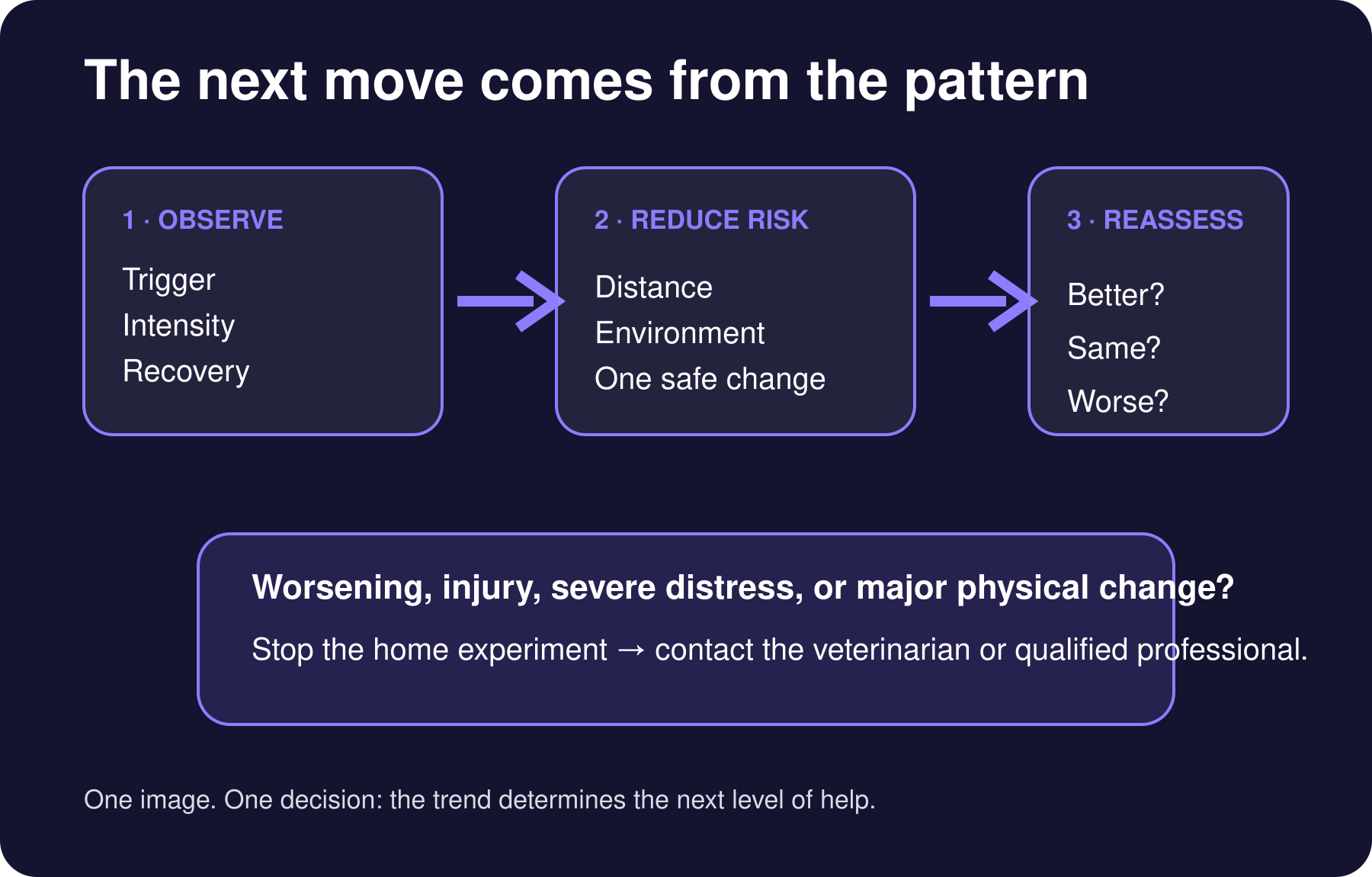
For dog afraid of crate, the sequence below keeps action attached to evidence instead of a guess. Its fixed point is simple: A crate is useful only while it remains a safe space. Panic is a stop signal, not a cue to wait longer.
- Separate hesitation from panic: end the setup before panic and use a safer management arrangement. Reassess by watching panting when cool, drooling, continuous vocalizing, bar biting, bloody nails, elimination, and inability to eat.
- Check whether the crate is the trigger: compare low-risk setups without pushing to distress. Reassess by watching response to an open crate, closed door with owner present, baby gate, pen, and being alone loose.
- Make the resting space physically workable: adjust location and bedding, and remove snag hazards. Reassess by watching turning space, comfortable posture, temperature, ventilation, footing, and ease of stepping in.
- Rebuild voluntary entry: reinforce small voluntary steps and keep sessions brief. Reassess by watching willingness to look in, step in, eat, rest, and return after exiting.
- Add the door as a separate skill: move the door slightly, reinforce, reopen, and build duration in tiny increments. Reassess by watching body tension as the door shifts, orientation to the exit, and ability to continue eating.
- Do not use the crate to solve every problem: match the intervention to the pattern instead of adding hours. Reassess by watching whether distress occurs only alone, only confined, after exercise, or during specific noises.
If these steps cannot be carried out without triggering panting when cool, drooling, continuous vocalizing, bar biting, bloody nails, elimination, and inability to eat, stop increasing the challenge. That result is enough to justify a safer setup and a case-specific conversation; the dog does not need to fail more dramatically first.
Quick decision questions
Which change matters first?
For dog afraid of crate, begin with this observable distinction: response to an open crate, closed door with owner present, baby gate, pen, and being alone loose. The first low-risk response is to compare low-risk setups without pushing to distress. If that cannot be done without provoking the problem, move the case out of trial-and-error mode.
What belongs in the record?
Track body tension as the door shifts, orientation to the exit, and ability to continue eating. Add the time needed to recover and any change in appetite, sleep, movement, elimination, or social behavior. Record naturally occurring events; do not stage a stronger version for the camera.
When does outside help move forward?
Do not create a long absence merely to collect evidence. A useful handoff includes what triggered the event, what reduced it, and what happened after record a short, safely planned absence below known panic duration.
Sources
How this article is checked. Every claim in this article goes through a structured evidence review before publishing: checked against veterinary guidelines (AAHA, WSAVA, AVMA) and peer-reviewed veterinary research, graded for how strong the evidence actually is, and screened for overstated or missing context. Articles that don't clear this review are not published. This is general educational information, not a substitute for professional veterinary advice — always consult your vet about your individual dog.