
Dog Body Condition Score: What the Scale Cannot Tell You
Most owners do not need a longer list of possibilities. They need to know which detail changes the next move. Body weight is a number. Body condition asks where fat is—and muscle condition asks what weight may be hiding. This guide turns that distinction into an observation plan: what to notice, what you can change safely, and when the pattern belongs with your veterinarian or a qualified behavior professional.
Use your hands as well as your eyes
A coat can hide the rib line, and breed shape can mislead the eye. A body condition check combines touch with the waist and abdominal profile. The details worth capturing are how easily ribs are felt, fat over the ribs, waist from above, and abdominal tuck from the side. Those observations describe a sequence rather than forcing one moment into a diagnosis. Note what changed first and how long the dog needed to return to baseline.
Start here: compare the same dog in the same stance every few weeks. Keep the setup easy enough that safety and choice remain intact. One photo or one number is not a diagnosis. If the response worsens after the change, undo the added difficulty and reassess the premise.
Aim for a range, not visual thinness
On a nine-point scale, many healthy dogs fall around four to five, but individual assessment still matters. Watch for ribs that are easy to feel without heavy pressure and a visible waist. The earliest change is usually more actionable than the loudest part of the event, because it shows where prevention was still possible.
confirm the target with the veterinary team, especially during growth or illness. Then compare intensity, duration, and recovery with the previous occurrence. Do not chase a score by sharply cutting food without a plan. A plan earns another attempt only when the dog remains physically safe and the trend is stable or improving.
Score fat and muscle separately
A dog can carry excess fat and still lose muscle, particularly with aging or disease. Scale weight may barely change while body composition worsens. For an owner, the usable evidence is concrete: muscle over the spine, shoulder blades, skull, and pelvis in addition to fat coverage. Write those details down without deliberately recreating the problem. A natural event observed safely is enough.
The next move: ask for both body condition and muscle condition to be recorded at exams. This is a management or learning step, not proof of a diagnosis. A normal-looking weight does not rule out muscle loss. When a physical sign appears alongside the pattern, the medical question moves ahead of further practice.
Build a reliable home baseline
Single impressions are noisy. Repeated observations under similar conditions show direction. Do not judge it from one dramatic snapshot. Instead, compare weight on the same scale, top and side photos, rib feel, waist, appetite, and activity. Context can change the meaning of the same outward behavior.
A reasonable first response is to record a baseline and repeat at a consistent interval. Give that change a fair but safe trial, and stop before distress or injury becomes the price of information. Daily weighing can create false alarms from food, water, and elimination. Improvement should look like easier recovery, not mere suppression.
Measure intake before changing brands
Portion creep, shared treats, chews, table food, and multiple feeders often matter more than a dramatic food switch. The distinction becomes clearer when you track grams of food, treats, supplements, chews, and food given by each person. This is especially useful when several people handle the dog and remember the event differently.
Practical decision: complete a three-day diet history and weigh portions when practical. Change only what the dog can tolerate without force. Cup measures are less precise than a gram scale for many dry foods. If the household cannot maintain that boundary consistently, professional help becomes part of risk management rather than a last resort.
Treat label directions as a starting point
Package feeding guides cannot know the individual dog’s activity, neuter status, environment, or health. Before adding a product or a harder exercise, look at trend in condition after feeding the labeled amount. These signs tell you whether the present setup is workable.
adjust with veterinary guidance based on the dog’s response. Recheck the same markers afterward instead of relying on whether the dog simply became quieter. Do not infer that the food is defective because the starting amount needs adjustment. Quiet behavior can reflect comfort, fatigue, freezing, or learned inhibition; the surrounding pattern decides which explanation is plausible.
Protect growing and medically complex dogs
Puppies, pregnant dogs, dogs with disease, and dogs already losing weight need individualized nutrition decisions. The details worth capturing are growth rate, stool, appetite, vomiting, medication, and diagnosed conditions. Those observations describe a sequence rather than forcing one moment into a diagnosis. Note what changed first and how long the dog needed to return to baseline.
Start here: involve the veterinarian before intentional restriction or major diet change. Keep the setup easy enough that safety and choice remain intact. Rapid weight loss and nutrient imbalance can cause harm. If the response worsens after the change, undo the added difficulty and reassess the premise.
Recognize changes that need an exam
Unplanned loss, muscle wasting, abdominal enlargement, marked appetite change, or poor stamina is not a cosmetic problem. Watch for speed of change and accompanying thirst, urination, vomiting, diarrhea, pain, or lethargy. The earliest change is usually more actionable than the loudest part of the event, because it shows where prevention was still possible.
schedule prompt veterinary evaluation when change is unexplained or progressive. Then compare intensity, duration, and recovery with the previous occurrence. Collapse, severe weakness, breathing difficulty, or inability to eat needs urgent care. A plan earns another attempt only when the dog remains physically safe and the trend is stable or improving.
Choose the next action from the trend
The useful question is not whether the dog looks perfect today, but whether condition is stable, improving, or moving the wrong way. For an owner, the usable evidence is concrete: two or more comparable observations rather than one isolated check. Write those details down without deliberately recreating the problem. A natural event observed safely is enough.
The next move: keep the plan if the trend is appropriate; reassess portions or health if it is not. This is a management or learning step, not proof of a diagnosis. A home score supports—not replaces—professional assessment. When a physical sign appears alongside the pattern, the medical question moves ahead of further practice.
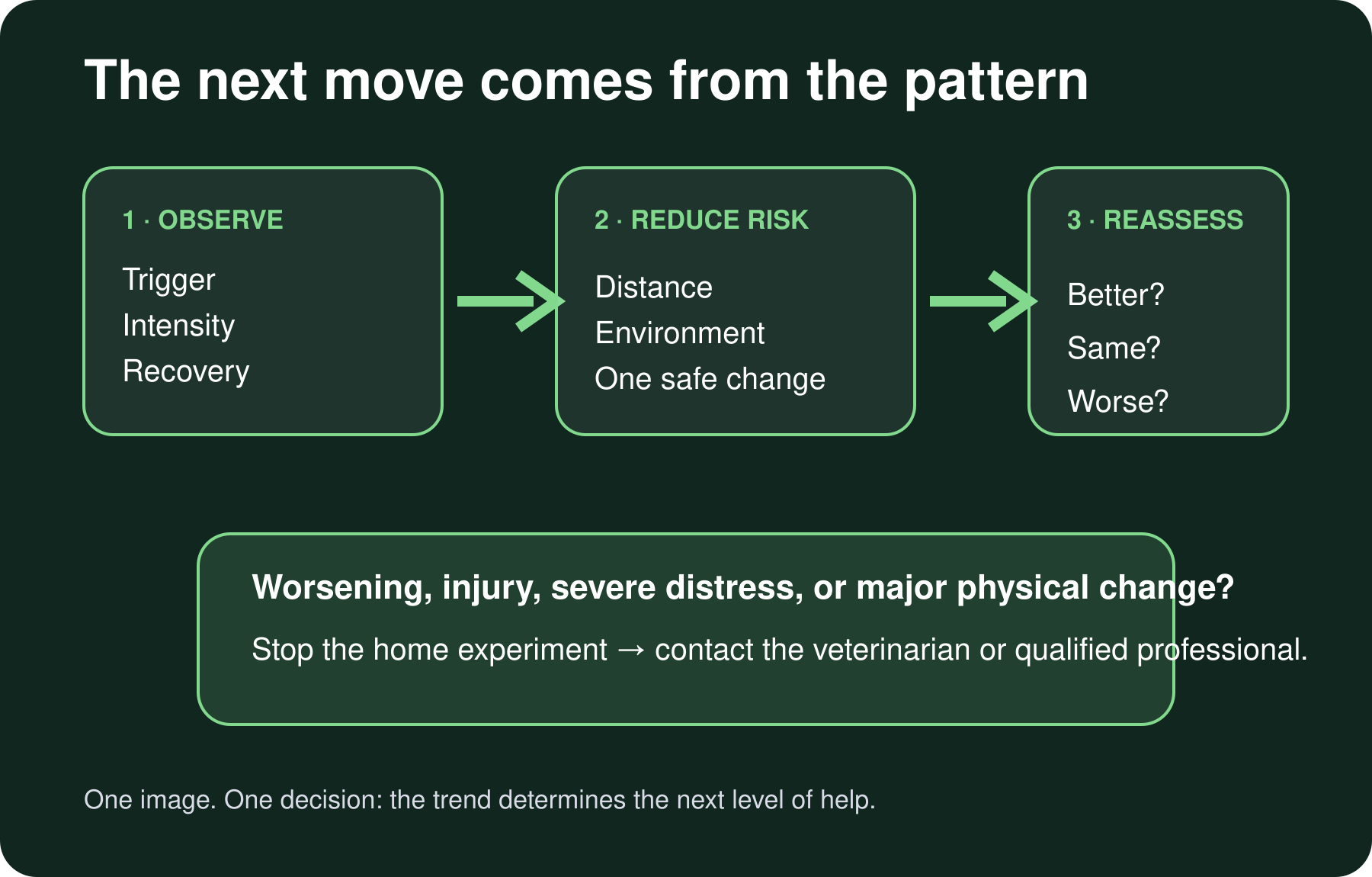
Your decision map
For dog body condition score at home, the sequence below keeps action attached to evidence instead of a guess. Its fixed point is simple: Body weight is a number. Body condition asks where fat is—and muscle condition asks what weight may be hiding.
- Use your hands as well as your eyes: compare the same dog in the same stance every few weeks. Reassess by watching how easily ribs are felt, fat over the ribs, waist from above, and abdominal tuck from the side.
- Aim for a range, not visual thinness: confirm the target with the veterinary team, especially during growth or illness. Reassess by watching ribs that are easy to feel without heavy pressure and a visible waist.
- Score fat and muscle separately: ask for both body condition and muscle condition to be recorded at exams. Reassess by watching muscle over the spine, shoulder blades, skull, and pelvis in addition to fat coverage.
- Build a reliable home baseline: record a baseline and repeat at a consistent interval. Reassess by watching weight on the same scale, top and side photos, rib feel, waist, appetite, and activity.
- Measure intake before changing brands: complete a three-day diet history and weigh portions when practical. Reassess by watching grams of food, treats, supplements, chews, and food given by each person.
- Treat label directions as a starting point: adjust with veterinary guidance based on the dog’s response. Reassess by watching trend in condition after feeding the labeled amount.
If these steps cannot be carried out without triggering how easily ribs are felt, fat over the ribs, waist from above, and abdominal tuck from the side, stop increasing the challenge. That result is enough to justify a safer setup and a case-specific conversation; the dog does not need to fail more dramatically first.
Quick decision questions
Which change matters first?
For dog body condition score at home, begin with this observable distinction: ribs that are easy to feel without heavy pressure and a visible waist. The first low-risk response is to confirm the target with the veterinary team, especially during growth or illness. If that cannot be done without provoking the problem, move the case out of trial-and-error mode.
What belongs in the record?
Track grams of food, treats, supplements, chews, and food given by each person. Add the time needed to recover and any change in appetite, sleep, movement, elimination, or social behavior. Record naturally occurring events; do not stage a stronger version for the camera.
When does outside help move forward?
Collapse, severe weakness, breathing difficulty, or inability to eat needs urgent care. A useful handoff includes what triggered the event, what reduced it, and what happened after schedule prompt veterinary evaluation when change is unexplained or progressive.
Sources
How this article is checked. Every claim in this article goes through a structured evidence review before publishing: checked against veterinary guidelines (AAHA, WSAVA, AVMA) and peer-reviewed veterinary research, graded for how strong the evidence actually is, and screened for overstated or missing context. Articles that don't clear this review are not published. This is general educational information, not a substitute for professional veterinary advice — always consult your vet about your individual dog.