Your Dog’s Bad Breath Isn’t a Mouth Problem — It’s a Diagnosis
It’s a message. And most people throw a dental chew at it without reading it.
Here’s something vets know that most owners don’t: they can often narrow down what’s wrong with a
dog before touching the mouth — just from the kind of bad breath.
Not how strong it is. What it smells like.
The smell isn’t the problem. The smell is the diagnosis.
“Dog breath” gets waved off as normal. And a mild whiff after a meal usually is. But breath that
turns genuinely foul — and stays that way for weeks — isn’t a hygiene issue you cover up with a
minty treat. It’s your dog’s body flagging something. The trick is learning to read which something.
What the Smell Actually Means
Chronic bad breath isn’t one condition. Different problems produce different odors — and that’s
exactly what makes the smell so useful.
Most of the time — and this part is real — it is the teeth. By age three, the majority of
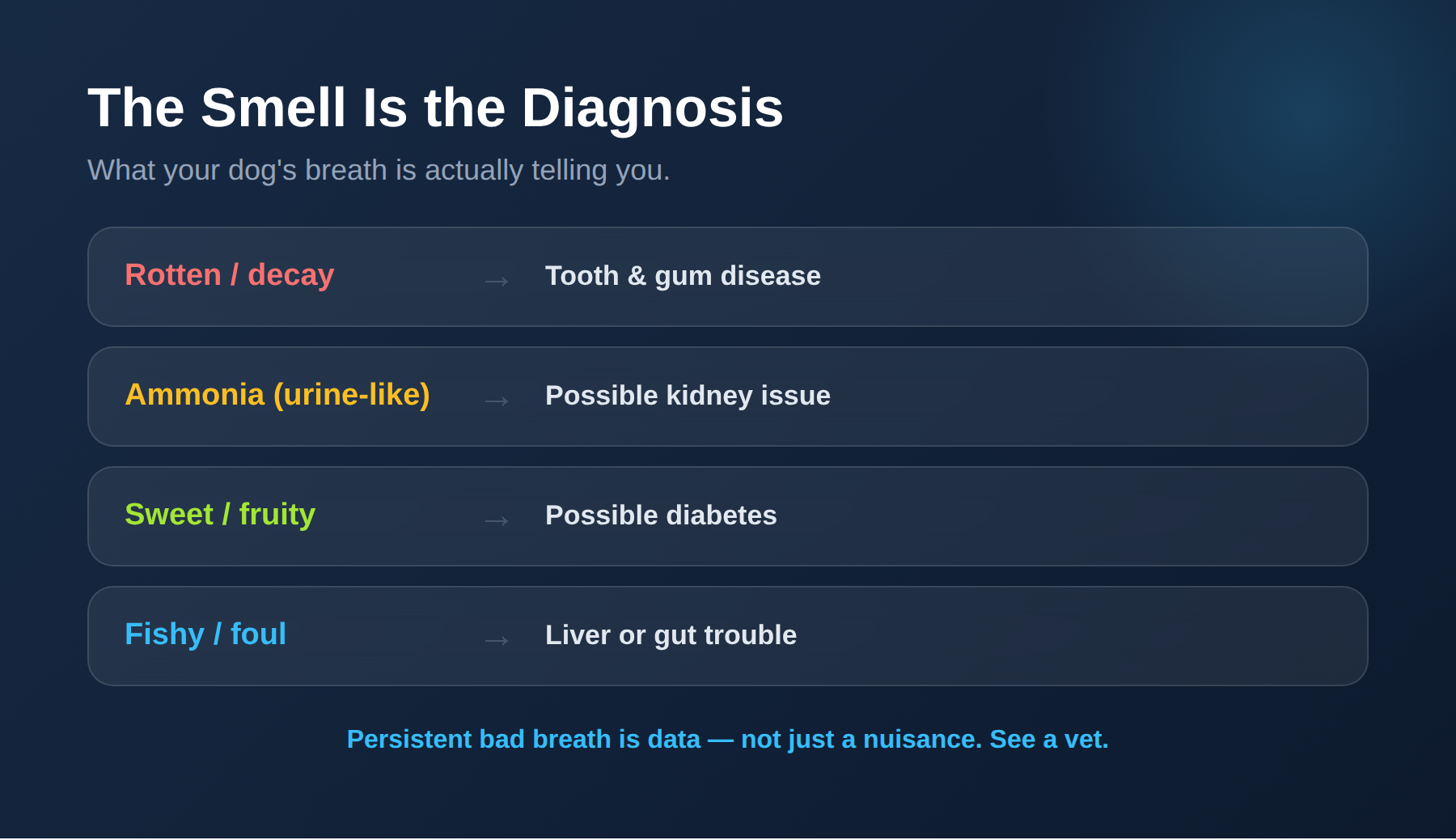
dogs already have some gum disease, and that’s the number-one cause of the rotten, unmistakable
smell. But the other smells are the ones nobody teaches you:
A breath that smells like urine or ammonia can point to the kidneys struggling to
filter waste. A sweet, fruity, nail-polish note can signal diabetes. A
fishy or musty smell can trace back to the liver — or to a gut microbiome that’s
tipped out of balance, where the wrong bacteria produce gas that literally gets exhaled.
It does nothing for a kidney one.
That’s the whole trap. If the smell is coming from inside — kidney, liver, gut — masking it
with a treat just delays the vet visit that actually matters.
And here’s the connection most people miss.
If you read our piece on tear stains, this will sound familiar. Gut bacteria producing smelly
compounds that get absorbed and breathed back out is a well-documented mechanism — that part
isn’t in question. What’s still an emerging idea, not a settled one, is exactly how much a general
gut imbalance drives that process versus other factors. Either way, it’s one more reason “just
brush harder” doesn’t always fix a fishy or musty breath.
The pattern from a different angle: the mouth is often just the window. The weather can be
happening somewhere deeper.
So What Do You Actually Do?
Read the smell first, then act. Here’s the order that keeps you from wasting money on the wrong fix.
🐾 Bad-breath triage
- Rotten / tartar smell, otherwise healthy dog? This is the dental lane. Brushing, vet dental cleanings, and vet-approved dental chews genuinely help here — because the source really is the mouth.
- Ammonia, sweet, or fishy smell? Skip the chew aisle. This is a vet visit. These odors can flag kidney, liver, or metabolic issues that no product fixes.
- Breath got worse alongside other changes — more thirst, weight loss, vomiting, low energy? Vet, sooner rather than later.
- Supporting the gut — a cleaner diet, fewer junk fillers — can quietly improve breath that’s coming from digestion rather than teeth.
The honest line: the most common cause really is dental — but “most common” isn’t
“always.” If the smell is ammonia, sweet, or fishy, or if it arrives with thirst, weight loss, or
vomiting, don’t self-treat. That’s a diagnosis for your vet, not a job for a chew.
The Bottom Line
- Bad breath is a symptom, not the disease — and the smell tells you which disease.
- Rotten = usually teeth (chews and cleanings help). Ammonia / sweet / fishy = go to the vet.
- The gut may play a bigger role than most people think — a possible link, not yet a settled one.
- A dental chew masks a mouth smell. It can’t touch a smell coming from inside.
Don’t cover the smell.
Read it.
Here to help you care smarter — not spend more. 🐾
The Four Stages Your Vet Is Actually Grading
When a vet writes “PD 1” or “PD 3” in your dog’s chart, they’re using a standardized 0-to-4 scale — set by the American Veterinary Dental College — that grades periodontal disease by attachment loss and bone loss, not by how much tartar is visible.
- Stage 0: Healthy. No gingivitis, no attachment loss.
- Stage 1 (gingivitis only): Gum inflammation without bone loss — the last stage that’s fully reversible with a professional cleaning and consistent home care.
- Stage 2: Early attachment loss begins. Some of the damage is now permanent, though progression can still be slowed significantly.
- Stage 3: Moderate to advanced bone loss. Teeth may become mobile. Pain is very likely present even without obvious behavior changes.
- Stage 4: Severe, often irreversible bone loss (over 50%), loose or lost teeth, and real risk of the infection affecting organs via the bloodstream.
The uncomfortable statistic worth knowing: most dogs show measurable evidence of periodontal disease by around age three. A dog that looks and acts completely normal at home can already be well past Stage 1 — which is exactly why bad breath, on its own, is worth treating as a diagnostic clue rather than something a dental chew alone should silence.
When bad breath stops being a “watch it” issue
Move a dental concern from routine to prompt veterinary evaluation if any of these appear alongside the odor: drooling, pawing at the mouth, reluctance to eat or chew on one side, visibly loose or discolored teeth, facial swelling, or bleeding from the gums. These can signal Stage 3–4 disease or an active dental abscess — neither resolves with brushing or chews alone, and both are genuinely painful conditions even when a dog doesn’t show obvious pain behavior.
The home routine that actually slows the stages down
Daily tooth brushing with a dog-specific enzymatic toothpaste (never human toothpaste, which often contains xylitol) is the single most effective at-home measure, because it physically disrupts the bacterial biofilm before it hardens into tartar — a chew alone can’t reach the gumline the way a brush can. For dogs who won’t tolerate brushing, look specifically for dental chews and diets carrying the Veterinary Oral Health Council (VOHC) seal, which means the product has actual data behind its plaque or tartar claims rather than just marketing language — a meaningful minority of dental products on shelves carry no such data at all.
Why “just get a cleaning” isn’t quite the full picture
A professional dental cleaning under anesthesia removes existing tartar and allows a thorough exam, including dental X-rays that can reveal disease hiding below the gumline — invisible from a simple mouth-look at home. But a cleaning is a reset, not a permanent fix: without a home-care routine afterward, plaque begins reforming within days, and the mouth can return toward its pre-cleaning state within months. Vets recommend home care specifically because the cleaning buys time, but daily maintenance is what actually keeps that time from running out again.
Breeds and mouths that need extra attention
Small and toy breeds are disproportionately affected by periodontal disease, partly because their teeth are often crowded into a proportionally smaller jaw, creating more surface area where plaque accumulates between teeth. Brachycephalic breeds face similar crowding issues from a different anatomical cause. None of this means larger or non-brachycephalic dogs are exempt — it means owners of predisposed breeds have less margin for skipping home care, since the disease tends to progress faster in a mouth that was already working against them anatomically.
Other, less common causes worth knowing about
Persistent bad breath isn’t always dental. Kidney disease can produce a distinctive ammonia-like odor as the body struggles to clear waste products normally. Diabetes can cause a sweet, almost fruity smell tied to how the body processes sugar. Gastrointestinal issues occasionally contribute a sour smell unrelated to the mouth itself. None of these are common explanations compared to straightforward dental disease, but they’re part of why a vet asks about the character of the smell rather than assuming every case is purely a tooth problem.
Whatever the underlying cause turns out to be, persistent bad breath is worth treating as information rather than an inconvenience to mask, since it’s rarely just about the smell itself. A dog that tolerates brushing well from a young age also makes every future dental visit and home-care routine considerably easier, which is worth keeping in mind even for puppies who don’t yet show any signs of dental disease. A cleaner mouth is, quite literally, a healthier dog in more ways than the smell alone suggests. That’s a fair trade for a few minutes a day, most days of the week.
For general information only; not a substitute for veterinary care. Persistent bad breath —
especially an ammonia, sweet, or fishy odor, or breath accompanied by increased thirst, weight
loss, or vomiting — warrants a veterinary exam. Background drawn from veterinary and pet-health
references including PetMD, UC Davis School of Veterinary Medicine, and Chewy veterinary guidance
on canine halitosis.
How this article is checked. Every claim in this article goes through a structured evidence review before publishing: checked against veterinary guidelines (AAHA, WSAVA, AVMA) and peer-reviewed veterinary research, graded for how strong the evidence actually is, and screened for overstated or missing context. Articles that don't clear this review are not published. This is general educational information, not a substitute for professional veterinary advice — always consult your vet about your individual dog.
One Comment
Comments are closed.